A few years ago I was in a room debugging a rollout that was three weeks behind schedule.
Everyone in that room was talented. The project manager was sharp. The techs on-site were experienced. The engineers on the call knew the product cold.
I kept expecting to find the one thing to fix. I never did, because there wasn’t one.
What I found instead was more interesting: the process itself had never been designed to make success easy. We’d hired great people, but we’d designed a system that expected them to overcome unnecessary friction every single day.
That reframe changed everything. Once I stopped asking “who’s slowing this down” and started asking “what would make this easier,” the fixes were obvious and fast.
Complexity is a Choice and So Is Simplicity
Before we can reduce complexity, it’s worth defining what it actually is.
Technology complexity isn’t the result of one bad decision. It’s the accumulation of manual processes, disconnected systems, one-off exceptions, and well-intentioned workarounds that slowly become “the way we’ve always done it.”
Here’s the belief I keep coming back to: complexity isn’t something that happens to a company. It’s something a company chooses, one shortcut and one “we’ll fix it later” at a time.
Nobody sits down and decides to build a complicated system on purpose. Complexity accumulates — a manual workaround here, a one-off exception there. Each decision looks reasonable in isolation. The sum of them is a system nobody fully understands anymore.
The encouraging part is that the fix isn’t primarily a technology problem — it’s a leadership opportunity. The best leaders I know default to subtraction when something breaks, not addition. That’s a harder, less visible move than adding one more check, and it’s the one that builds the most durable systems over time.
Where Complexity Hides
I see this pattern everywhere—technology projects, business processes, customer experiences, even the way organizations communicate. Deployment just happens to be one place where the effects are impossible to ignore. Most organizations aren’t fully manual, and they’re not fully automated — they’re somewhere in between, and simply being able to name where honestly is already a real advantage.
The infrastructure that works best is the infrastructure you never think about. Nobody thinks about the electrical grid when they flip a light switch — not because it’s simple, but because its complexity has been made invisible. That’s the bar for good technology: not “does it work,” but “does it disappear.”
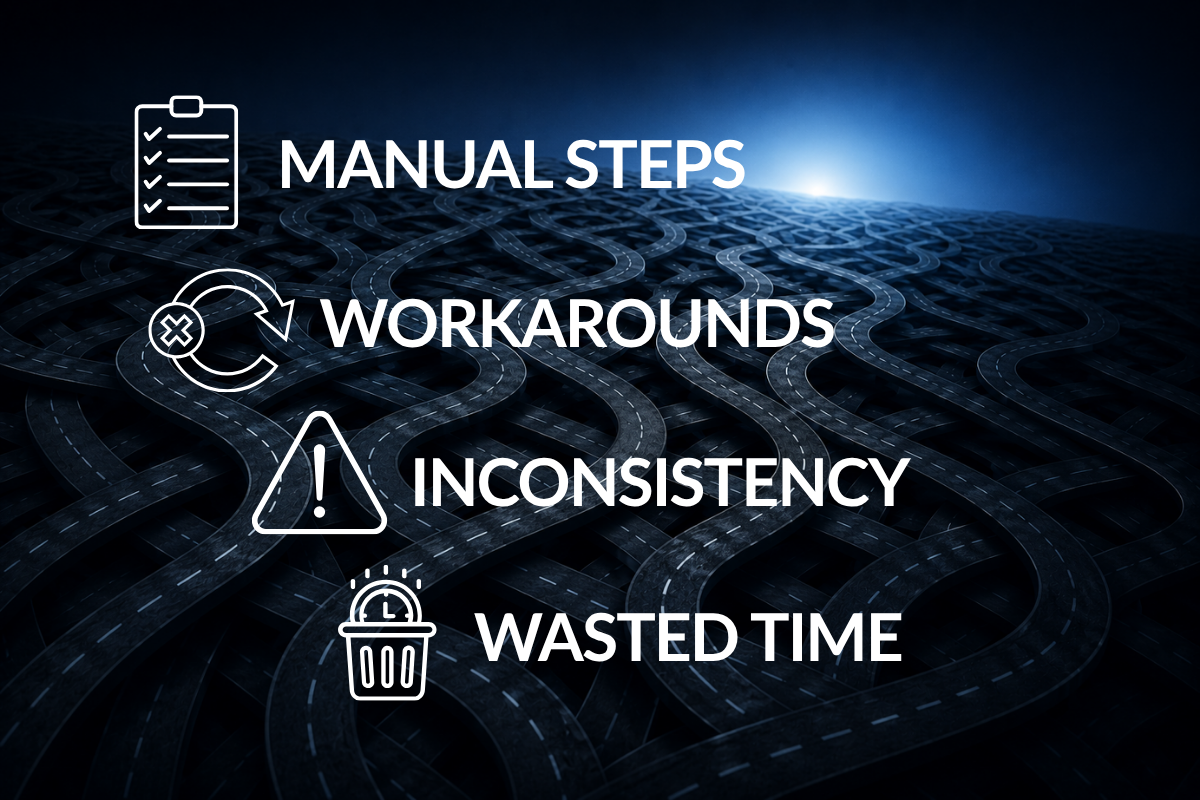
Complexity doesn’t happen overnight. It grows one workaround, one exception, and one manual step at a time.
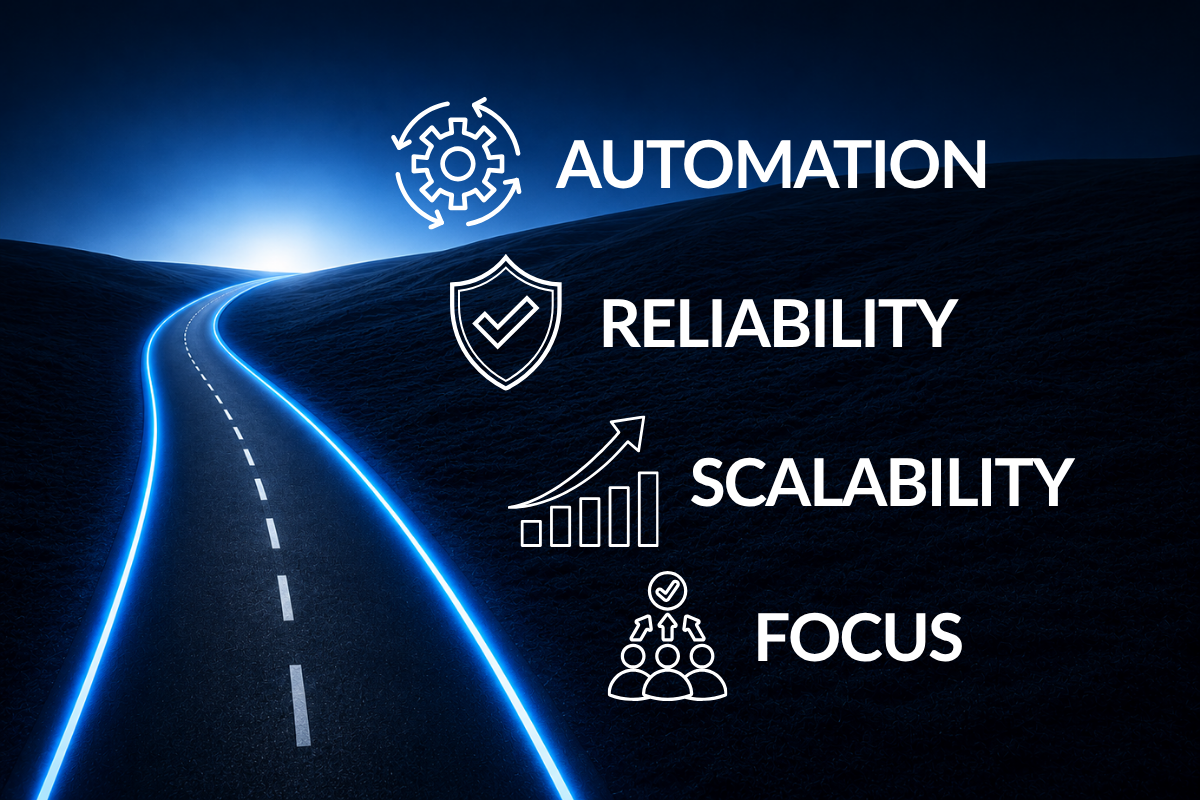
The best leaders and the best systems don’t ask people to work harder; they remove unnecessary work.
Better Questions Before Better Software
When I’m brought in to advise on a technology decision, the first thing I do isn’t look at the software options. It’s ask questions nobody’s asked yet: What problem are we actually solving, not the symptom, the root cause? Who benefits most if we get this right? What are we assuming is true that we’ve never verified?
It’s tempting to skip straight to evaluating vendors because demos feel like progress. The teams that get the best outcomes just ask a few more questions first. The best engagements I’ve been part of spent more time on questions than on tools, and by the time we got to software, the answer was usually obvious.
Three Questions Before Choosing Technology
Before evaluating software, I try to answer three questions.
1. What problem are we actually solving? Not the symptom—the root cause.
2. Why does that problem exist? What process, assumption, or decision created it?
3. If we solved it perfectly, what would disappear?
The best technology removes work. It doesn’t create new work to manage.
I’ve found those three questions are usually more valuable than the first three product demos.
What Makes Technology Feel Invisible
Ask people what makes technology feel magical, and the answers cluster around the same idea: it just works, it anticipates what you need, it’s simple to understand. Notice what’s missing — nobody says “it has a lot of features.” Magic is the absence of friction, not the presence of options.
That’s the standard I think our industry should be building toward, in hospitality and everywhere else: not more visible technology, but technology invisible enough that people can just do their jobs.
Technology feels magical when people stop noticing it.
Not because it became less sophisticated, but because it became easier to use.
The Choice in Front of Every Leader
None of this is really about deployment automation, or AI, or any specific technology. It’s about a choice every leader gets to make: do we address the symptom in front of us, or the system underneath it?
The companies that keep choosing the system move a little slower at first and a lot faster later. Complexity is a choice. So is simplicity. I know which one I’m betting on.
About the Author
Nathan Neipris
CEO & Co-Founder of Optylink
Nathan is an operations and transformation executive, entrepreneur, and advisor focused on helping organizations navigate complexity, drive growth, and execute large-scale change. Learn more about Nathan on LinkedIn.